
Last updated November 17, 2026
 Walk-in shower
 Tub-to-shower
 Freestanding tub
 Kohler
 Moen
 Delta
 Frameless glass
Free in-home design visit - walk-in showers, tub-to-shower conversions, and Kohler, Moen, and Delta fixtures planned to your exact space
Bathroom Remodeling Warning Signs: A Paradise Homeowner’s Reference Guide
A freshly painted bathroom wall is one of the quietest warnings a house can give you. Paint covers efflorescence, water staining, and the first bloom of mold better than anything else, and it costs almost nothing. In Paradise, where a lot of housing went up quickly during the building boom of the 1990s and 2000s, flipped surfaces and deferred maintenance sit behind more bathroom walls than most buyers expect. This guide gives you a diagnostic framework: how to read grout and caulk as a map of water travel, how our hard water hides failing valves, what a floor flex means for your scope, and when a warning sign is cosmetic and when it’s a remodel trigger. If you’re planning bathroom remodeling in Paradise, read this before a single tile comes up.
Quick Answer
The most reliable warning signs of a bathroom that needs a remodel are moisture that keeps returning after you fix it (grout cracking, caulk peeling, paint bubbling, efflorescence), a soft or flexing floor, an exhaust fan that’s undersized, noisy, or vented into the attic, and fixtures that have failed behind a wall. In Paradise specifically, our hard water masks failing valves and shower cartridges with mineral buildup, so the problem is already deeper than it looks. Cosmetic symptoms are usually the last stage, not the first.
Styles & brands we work with
- Walk-in shower
- Tub-to-shower
- Freestanding tub
- Kohler
- Moen
- Delta
- Frameless glass
Table of Contents
- Why the First Warning Sign Is Usually Hidden
- Reading Grout and Caulk Failure as a Water Map
- Hard Water in Paradise: When Mineral Buildup Hides a Failing Valve
- The Floor Flex Test and What a Soft Subfloor Means
- Exhaust Fan Warning Signs and Mold in Sealed Slab Homes
- Cosmetic Fix or Structural Remodel Trigger?
- The Ten-Minute Walk-Through We Recommend Every Homeowner Do
- Housing Stock, Age, and What It Predicts
Why the First Warning Sign Is Usually Hidden
The earliest sign a bathroom is in trouble is almost never the one you can see. It’s the moisture that came back after the last repair. Paint, fresh caulk, and a quick regrout all sit on top of a problem that started inside the wall assembly. In our experience with Paradise bathrooms, a cosmetic refresh is often the last layer applied before a sale, and the fresh surface is the thing to look at hardest.
Here’s what a cosmetic cover-up looks like when you pay attention:
- Paint that’s perfectly fresh on one wall and older on the other three
- Caulk that’s a different color or gloss from the trim it sits against
- New grout in a single patch of floor or shower stall, not the whole surface
- A bathroom that smells faintly of bleach or chlorine when the window has been closed
- Soft spots on the drywall at the base of the wall behind the toilet or next to the tub
None of those are proof. Together, they’re a signal to slow down and look underneath before you plan a finish schedule.
The reason it matters in Paradise is the housing stock. A large share of homes here were built fast during the 1990s and 2000s boom, and the waterproofing standards in that era were inconsistent. A shower that’s twenty-odd years old and has never been rebuilt is living on borrowed time – not because anything was installed wrong, but because the materials at the end of their service life behave the way materials do when they’re done. A home inspector flags visible evidence. A bathroom specialist reads the whole system: waterproofing, substrate, ventilation, plumbing, and drainage. Those are the four things a surface-level flip does not touch.
Reading Grout and Caulk Failure as a Water Map
Grout and caulk crack for a reason. Read the pattern and you’re reading the map of where water has been traveling behind the tile. The location of the failure tells you more than the failure itself.
- Caulk failure at the base of the shower, on one wall only. Water is pooling on that side because the shower floor slopes away from the drain, or the pan has started to deflect. It’s the slope and the pan, not the caulk.
- Hairline cracks spreading across the grout lines in a grid pattern. Usually movement in the substrate. The framing or backer board is deflecting underfoot. Caulk won’t fix it; the assembly needs a look.
- Caulk peeling upward at the top of the tile where it meets the ceiling or a furred wall. Water is wicking up the back of the wall from below. That’s a moisture path, not a cosmetic seam.
- Grout that looks stained and won’t clean, especially at the bottom six inches. Efflorescence – mineral salts pushed out from inside – is a sign of water sitting behind the tile for a while.
- Grout crumbling in one corner of the shower floor. Water is reaching the substrate through a gap in the waterproofing. This is the one most likely to need a full rebuild.
- Caulk that peels within weeks of being replaced. Whatever was under it is still wet. Caulk needs a dry surface; if it fails quickly, the wall is telling you the moisture never left.
In Paradise, that last pattern shows up more than people realize. Dry air and low outdoor humidity make a bathroom feel like it’s drying out between showers. The tile face dries. The inside of the wall doesn’t, because a sealed shower stall traps moisture and the exhaust fan may not be pulling it out. The surface looks fine on a Tuesday morning. Underneath, the substrate is wet.
Hard Water in Paradise: When Mineral Buildup Hides a Failing Valve
Paradise has hard water, and hard water hides everything. Scale, calcium, and magnesium buildup on a shower cartridge, a valve body, or a faucet aerator can look exactly like surface dirt. The fixture drips or the handle loosens; you clean it up and it looks fine again. The failure is still there. In our experience, most “the shower is just old” complaints we hear turn out to be a valve or cartridge that has been slowly losing performance behind a mineral crust.
Three tests tell you which you’re looking at:
- The hot-water adjustment test. Turn the handle slowly from cold to hot. If temperature changes feel uneven or the handle has to travel further than it should before the water is warm, the cartridge is wearing down.
- The drip test. Wipe the spout dry, wait an hour, and see if water has reappeared. A slow drip under mineral crust is one of the earliest signals, because scale inside the valve stops the cartridge from seating fully.
- The color test. White crust on the outside of a valve body is scale. A green or copper tinge is corrosion. Two different problems, two different scopes. Corrosion is the one that points toward replacement.
The reason this matters for a Paradise homeowner is timing. Every day a worn cartridge drips, the valve body takes a little more wear, and a job that could have been a cartridge swap becomes a valve replacement behind the wall. That’s the moment a warning sign stops being cosmetic. When you do decide to replace the fixtures, choosing a brand with replacement parts you can actually find matters. Kohler and Moen both have broad parts availability, which is one reason we work with them on both budget-matched and long-term-reliability builds. If the fixture hidden behind the wall is on its way out, that’s the moment to plan a walk in shower conversion if accessibility is on your list, so you don’t rebuild the same wall twice.
The Floor Flex Test and What a Soft Subfloor Means
Stand in the middle of the bathroom and rock your weight slowly from heel to toe. A slight give is normal in any floor. A visible flex, a spongy feel, or a spot where the tile line dips below the surrounding floor is a warning. Do it in shoes and bare feet – the bare-foot version reads better.
Then go around the perimeter, near the toilet, at the tub apron, and along the wall behind the shower, and press down firmly with your heel. Here’s what the result tells you:
- Tile moves when you step on it, but the floor does not. Likely a bond failure only. Cosmetic-level repair, sometimes a patch.
- The floor visibly moves and the tile stays put. The subfloor has deflection. Check for a joist issue below or a soft spot from old water. That points to a structural scope.
- Tiles pop, or a shower pan flexes when you step near the drain. The waterproofing membrane has failed somewhere. This is a full rebuild of the shower.
- A spongy spot near the toilet flange. Usually a wax ring failure that soaked the floor over time. Plan on replacing the subfloor around the flange, not just the flange.
In Paradise, this is where the housing era matters most. A flooring job rushed during the boom may use a thinner backer layer than a modern installation. It’s not a defect. It’s a decision made at the time, and it’s the reason a 1990s bathroom floor often reads as “flexy” when a newer build doesn’t. If the floor passes the test, good. If it doesn’t, that’s the line between a cosmetic refresh and a full remodel.
Exhaust Fan Warning Signs and Mold in Sealed Slab Homes
An exhaust fan is the single most-ignored piece of a Paradise bathroom, and in sealed-slab, low-attic-clearance construction, it’s also the one whose failure does the most damage. Slab-on-grade construction means moisture from below has no vent; the fan is the only way moisture from above gets out. A sealed bathroom with a weak fan keeps the humidity trapped.
Check these signs, in order:
- Hold a piece of toilet paper to the grille. If it drops, the fan isn’t pulling enough air. If it hangs with the fan on and drops when off, it’s moving at least some air.
- Listen for rattle, click, or hum that changes pitch. Failing motors and packed bearings sound different; a fan with a blocked wheel sounds labored.
- Inspect the vent termination. If the duct stops in the attic instead of going outside, you’re pumping humid air into the space above the bathroom. That’s a fan you’re paying to run for no benefit.
- Look for dark speckling on grout, caulk, or the ceiling paint, especially near the shower. Speckling high on a wall is a fan problem. Speckling low on a wall is more likely a waterproofing problem.
- Notice mist on the mirror after 10 minutes. A properly sized fan clears the mirror. A mirrored fog that persists is the clearest sign the fan is undersized.
Mold in a bathroom is not a cleaning problem. It’s an airflow problem first and a waterproofing problem second. If the fan doesn’t solve it, the wall assembly needs to be opened. If the fan is the fix, a swap during your remodel keeps the wall dry from the day it’s finished.
Cosmetic Fix or Structural Remodel Trigger?
This is the question that keeps scope honest. Most homeowners spiral toward one extreme or the other: patch it and hope, or tear it all out. The right call sits in the middle and depends on four questions, in order.
- Did the same symptom come back after the last repair? If yes, it’s structural. Cosmetic problems don’t recur in the same spot. Water does.
- Is there any sign of moisture behind tile or under floor? Efflorescence, a soft spot, a spongy walk, a stain that darkens after a shower. Any one of those moves the scope from the visible surface to the assembly.
- Does the fixture require replacing something behind the wall? A worn cartridge is cosmetic. A corroded valve body or a leaking shower pan is structural.
- Is the exhaust fan moving air to the outside? If not, the moisture problem has no exit, and a cosmetic fix will fail on schedule.
Answer yes to two or more of those, and a full remodel is the honest scope. Answer yes to one, and a phased repair may be enough. Our specialty is Bathroom Remodeling Paradise work that starts with a good diagnostic instead of a demolition date. That’s the whole reason we stay bathroom-only: the decision framework is different for a bathroom than for any other room, and it rewards someone who spends every day on the same problems.
The Ten-Minute Walk-Through We Recommend Every Homeowner Do
Before you call anyone or accept a quote, walk the bathroom yourself. Ten minutes of attention tells you more than a week of guessing.
- Step back and look at the paint on all four walls. Any wall in better condition than the others is worth a closer look. Take note of the color and gloss.
- Run your finger along every caulk seam. Peeling, cracking, or a seam that pops away from the tile in one specific spot is a moisture path.
- Do the heel-toe floor test in the center and again near the toilet and shower. Note any spot that dips or sounds hollow.
- Turn the shower on for two minutes and watch the drain. Slow drain is usually a sign of a trap issue or an old cast-iron fitting that’s built up scale from hard water.
- Run the exhaust fan and hold a piece of toilet paper to it. Note whether it holds, drops, or is rattling.
- Look up at the ceiling above the shower. Any darkening, blistering, or paint peeling is a top-of-wall moisture problem.
- Sniff the bathroom with the window closed for a few minutes. Musty, bleach, or “old towel” smell is a fan or waterproofing signal.
Write what you see. Photograph anything that fails. When an estimator arrives, a homeowner who has already answered these questions gets a specific, useful conversation instead of a generic pitch. In Paradise, that alone tends to produce a better scope.
Housing Stock, Age, and What It Predicts
A bathroom built in different eras tends to fail in different places, and knowing the era tells you where to look first. This isn’t about the company – it’s about the building.
- 1990s and 2000s construction: common in Paradise due to the boom. Watch for substrate deflection, older caulk, and exhaust fans at or past their service life.
- Mid-2000s and later: original waterproofing can already be at its service-life end in a shower that’s been used daily. The first sign is usually a shower pan leak, not a tile failure.
- Older renovations inside newer shells: the most deceptive category, because you can’t tell from the outside. A 2010s tile job over a 1990s waterproofing layer is common enough that we open walls before assuming.
- Flipped in the last five years: the fresh paint is the clue. A flip aesthetic refresh is usually cosmetic, and cosmetic covers, it doesn’t fix.
Whichever category your home falls in, the walk-through above applies. If you’re buying in Paradise, add one thing: ask for the last bathroom permit history. A remodeled bathroom with a permit has documentation. One without has a story.
Common Mistakes to Avoid
- Trusting fresh paint as a sign of a healthy bathroom. Fresh paint is the cheapest way to cover efflorescence, staining, and early mold. Look at the wall behind the toilet base and the wall next to the shower, where a cosmetic refresh usually stops short.
- Recaulking over wet substrate. Caulk needs a dry surface. If your new caulk peels within weeks, the moisture is still behind the tile and the wall is the thing that needs work, not the caulk.
- Replacing a shower cartridge without checking the valve body. In Paradise’s hard water, a new cartridge into a corroded valve body fails on the same schedule. Look at both, once, before you decide.
- Skipping the exhaust fan because the mirror clears eventually. “Eventually” is the warning. A properly sized, properly vented fan is the cheapest moisture control in the house. A fan vented into the attic isn’t moisture control at all.
- Assuming a floor flex is only a tile issue. It’s usually a substrate or waterproofing issue wearing a tile costume. Decide scope before you decide finishes, because the finish schedule depends on the assembly.
- Treating one failing seam as cosmetic because it’s one small seam. Water doesn’t travel in a straight line. A single seam failing at the bottom of a shower wall can mean the pan has been leaking under the tile for a while.
- Planning finishes before you’ve checked the waterproofing. The right order is assembly, ventilation, then the surface. Doing it in reverse is how remodels end up in scope creep.
See the difference
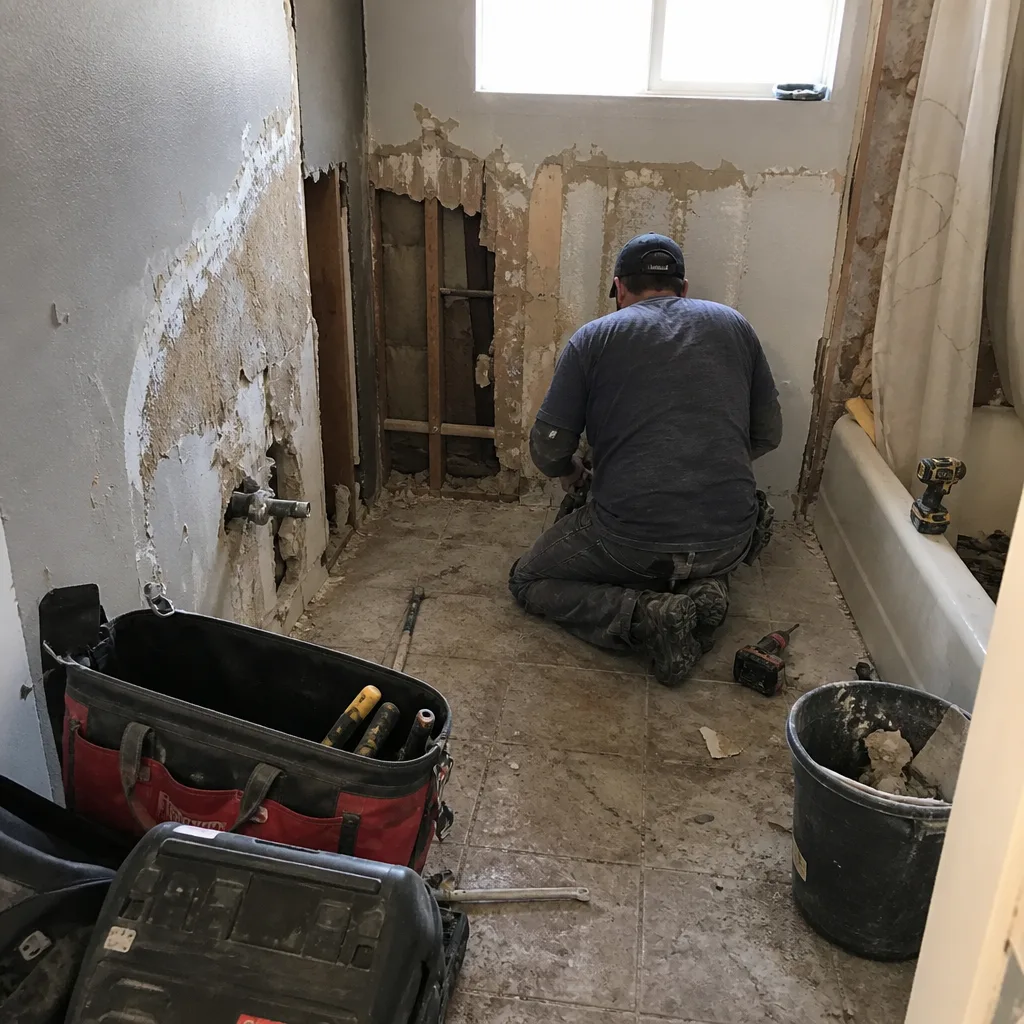 Before
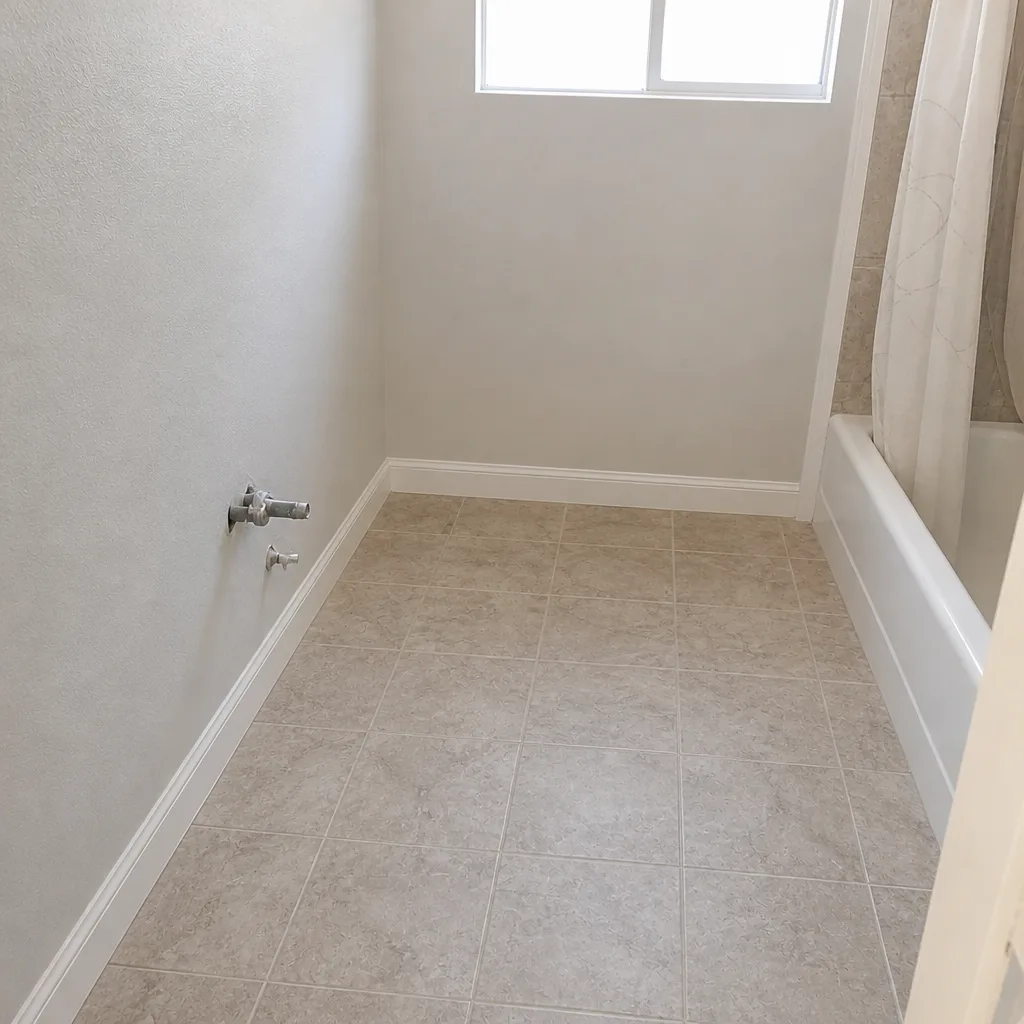 After
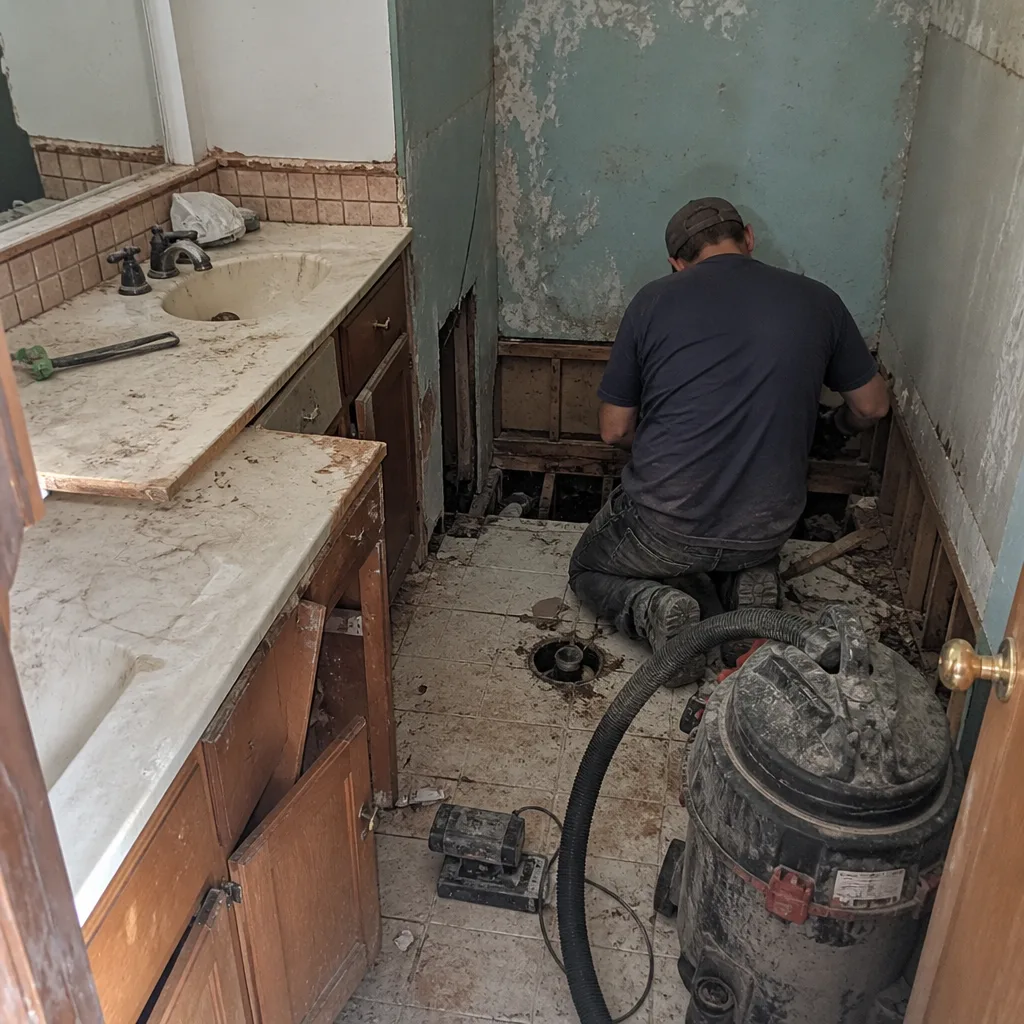 Before
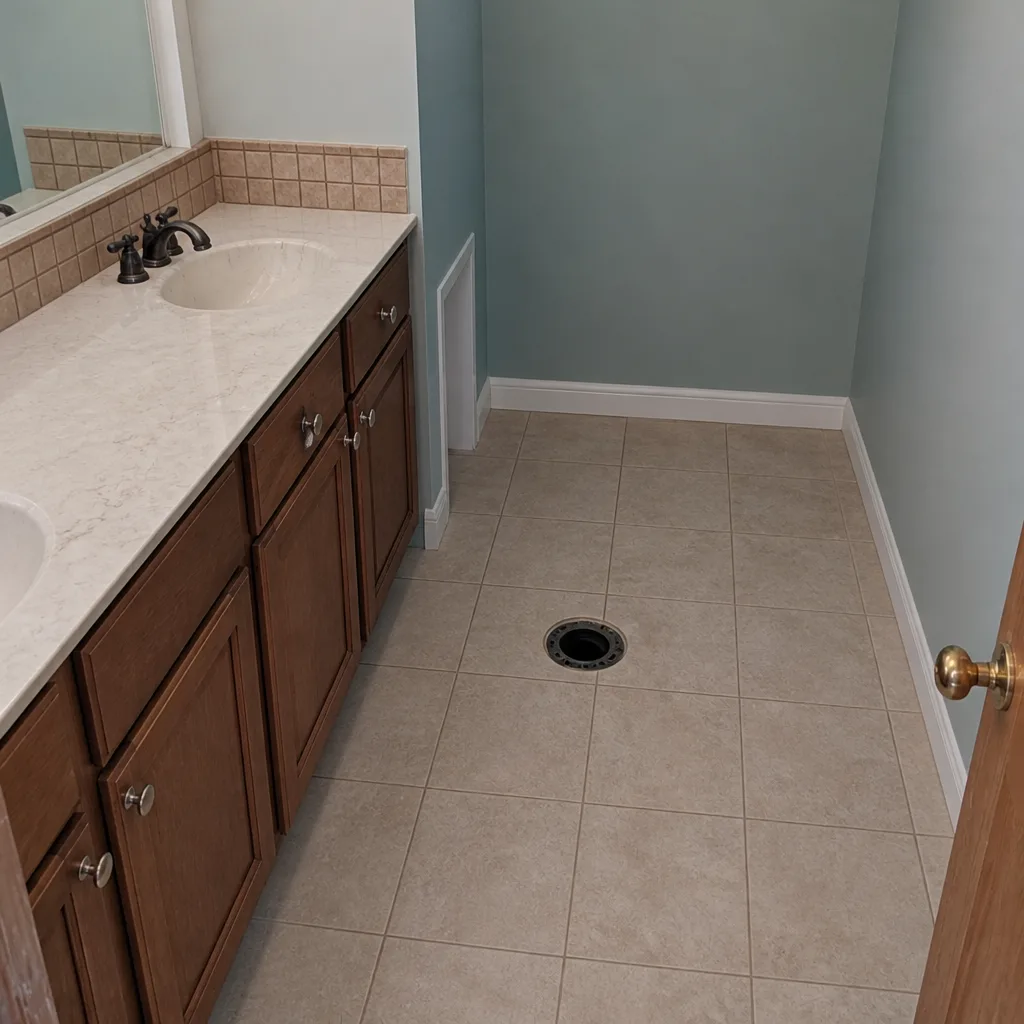 After
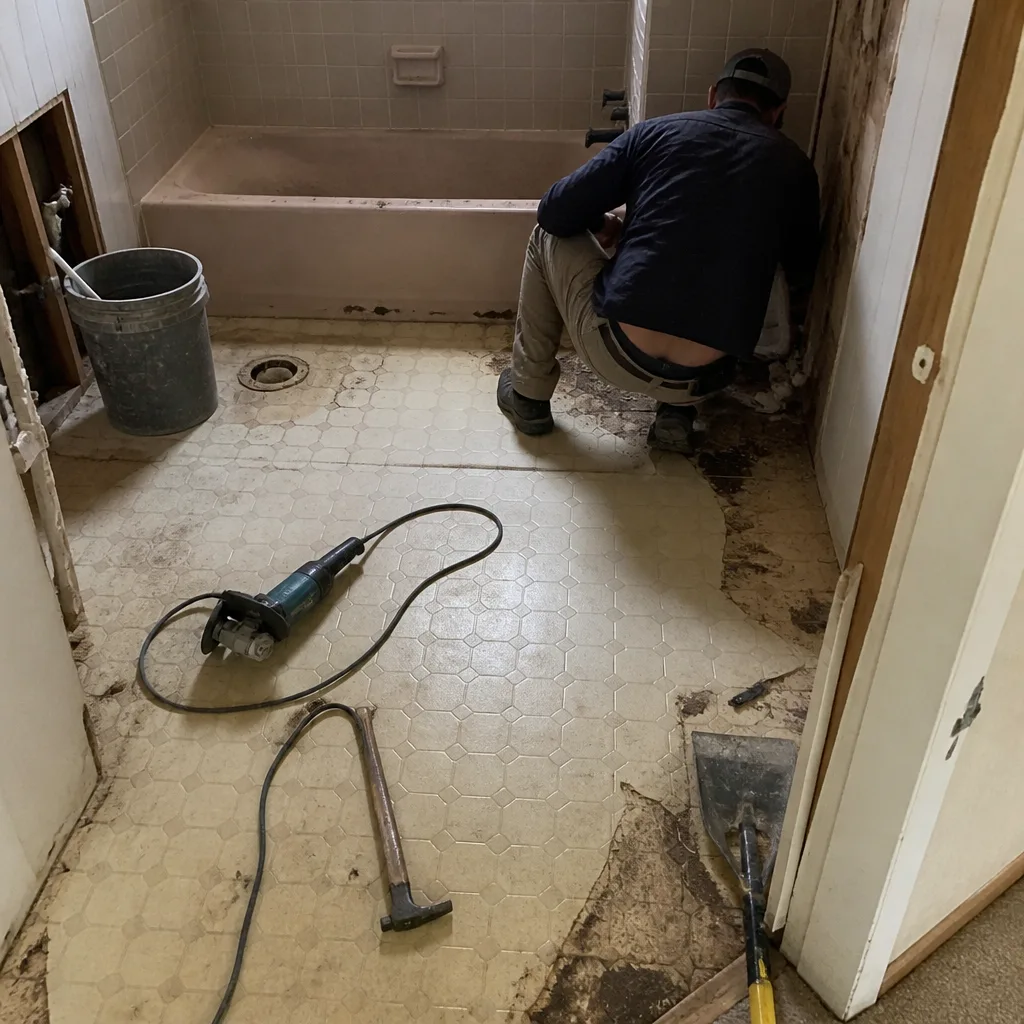 Before
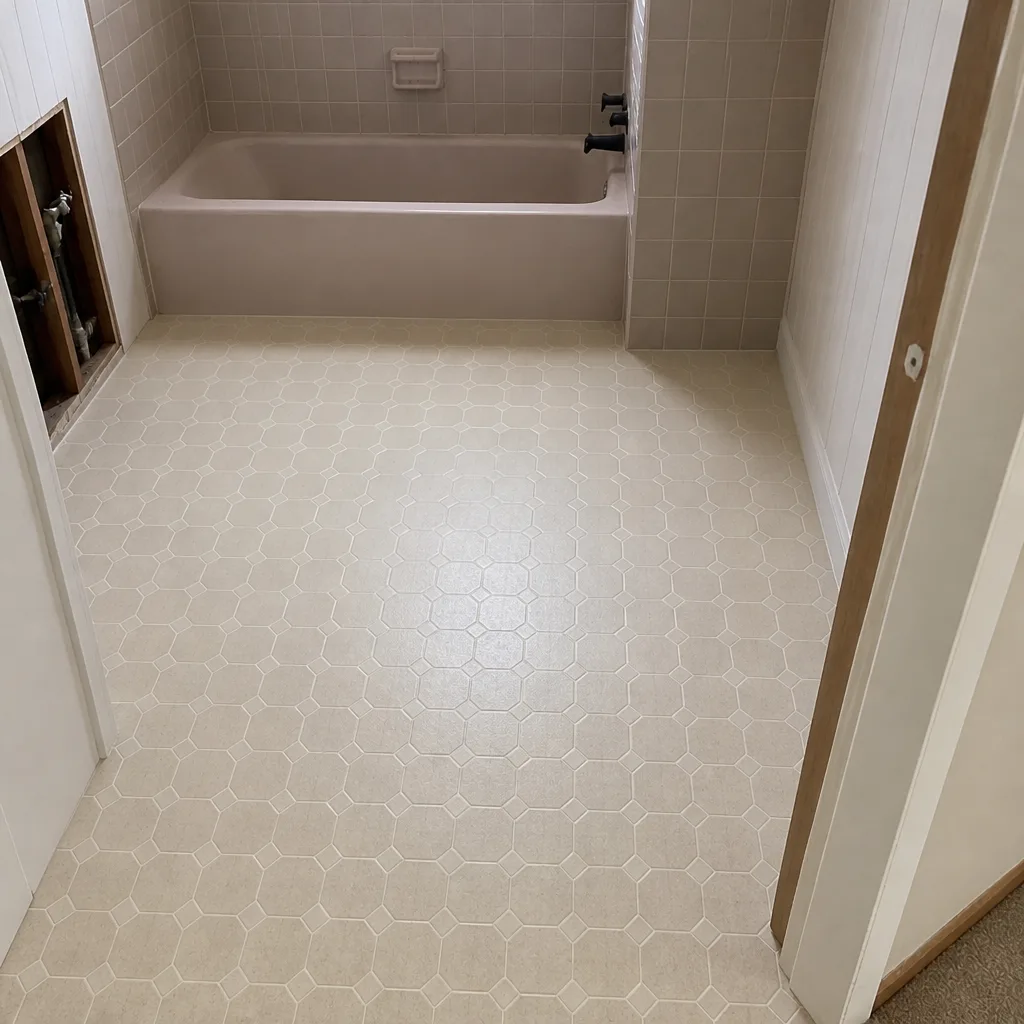 After
When to Call a Professional
Call a bathroom professional when a symptom comes back after a repair, when a floor flexes underfoot, when the shower pan itself moves when you step near the drain, when water stains sit above the shower ceiling, when the exhaust fan is vented into the attic, or when you’re opening the wall anyway and want the assembly built correctly the first time. Those are the moments where a cosmetic call costs more later. We work with brands including Kohler, Moen, Delta, and American Standard so budget and parts availability are matched to the home, and we waterproof to Schluter standards because the work you don’t see is the work that determines how long the work you do see lasts. Bathroom Remodeling Paradise offers free estimates in Paradise – call (888) 349-5908 to schedule yours. We answer 24/7. Fast dispatch from 7am to 7pm, Sunday through Friday.
Frequently Asked Questions
Moisture that comes back after a repair. A symptom that returns in the same spot is water, not a cosmetic defect. Any single one of the following is worth a closer look: recurring caulk failure, efflorescence at the base of the wall, a soft floor spot, or a mirror that won’t clear with the fan running. Call (888) 349-5908 for a free estimate – estimates are free.
It depends on the pattern. A single crack that appears fresh and stays put is maintenance. Caulk that peels within weeks of being replaced, or fails in one specific spot repeatedly, is a sign of moisture behind the tile. That’s a scope decision, not a caulk decision. Call (888) 349-5908 and we’ll talk through what you’re seeing.
Four questions in order: did the symptom return after the last repair, is there any sign of moisture behind tile or under floor, does a fixture need replacing behind the wall, and is the exhaust fan actually venting outside. Two or more yes answers points to a full remodel. One points to a phased repair. A free estimate gets you the specific answer for your bathroom.
Two reasons: materials reach their service life at the same time in a house that went up in a single build, and water-hardness wear on fixtures is often hidden by mineral crust until the fixture fully fails. The failure pattern is not a defect, it’s just age catching up in the same place. Call (888) 349-5908 to schedule an estimate and we’ll walk through the system together.
A flex that moves the whole floor usually means substrate deflection or an old water leak that softened the subfloor. A flex that pops tiles near the shower drain usually means a failed waterproofing membrane. Either way, the scope moves from finish work to assembly work. Free estimates can confirm which.
Sometimes. A failing cartridge, a worn fan, or a single piece of caulk in a bad spot can be repaired without opening the wall if the moisture problem is caught before it reaches the substrate. The earlier you call, the more options you keep. Call (888) 349-5908. We answer 24/7, and fast dispatch runs from 7am to 7pm, Sunday through Friday.
Home inspectors flag visible defects – evidence of an active problem. A bathroom specialist reads the system: waterproofing, substrate, ventilation, and plumbing, plus the era of the build and the pattern of repairs. Our technicians have up to 15 years of experience and can tell you which assembly is likely underneath before demolition starts. Call (888) 349-5908 for a free estimate.
The Bottom Line
The warning signs of a bathroom that needs more than a cosmetic fix are rarely the ones you can see from the doorway. Paint, caulk, and fresh grout cover the earliest signals. What you’re actually reading is moisture: where it traveled, how long it’s been there, and whether the assembly underneath is still doing its job. Read your grout and caulk as a map. Test your floor and your fan. Answer the four scope questions. In Paradise, hard water hides fixture wear, and the 1990s and 2000s housing stock rewards a homeowner who checks the assembly before planning finishes. A free estimate at (888) 349-5908 gets you that specific answer. We answer 24/7. Fast dispatch from 7am to 7pm, Sunday through Friday.
Written by the team at Bathroom Remodeling Paradise.