
Last updated November 17, 2026
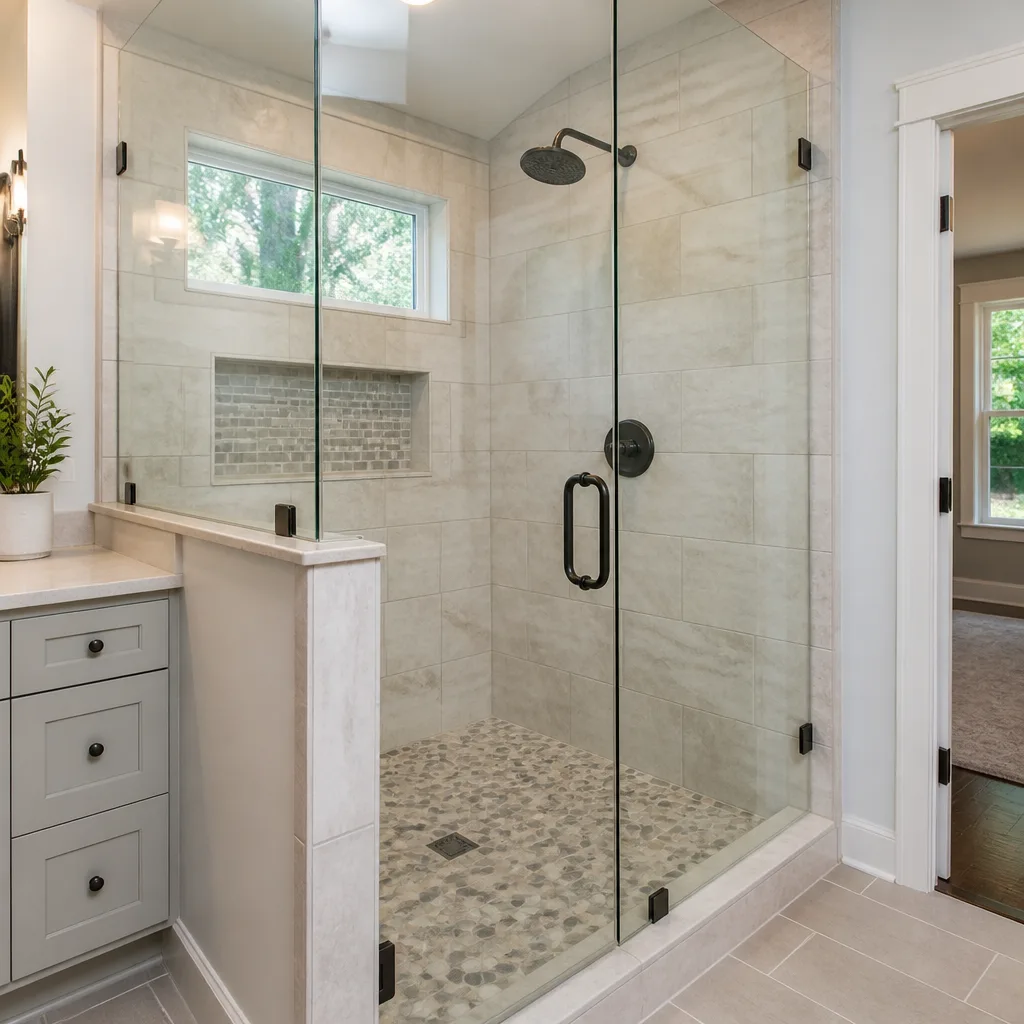 Walk-in shower
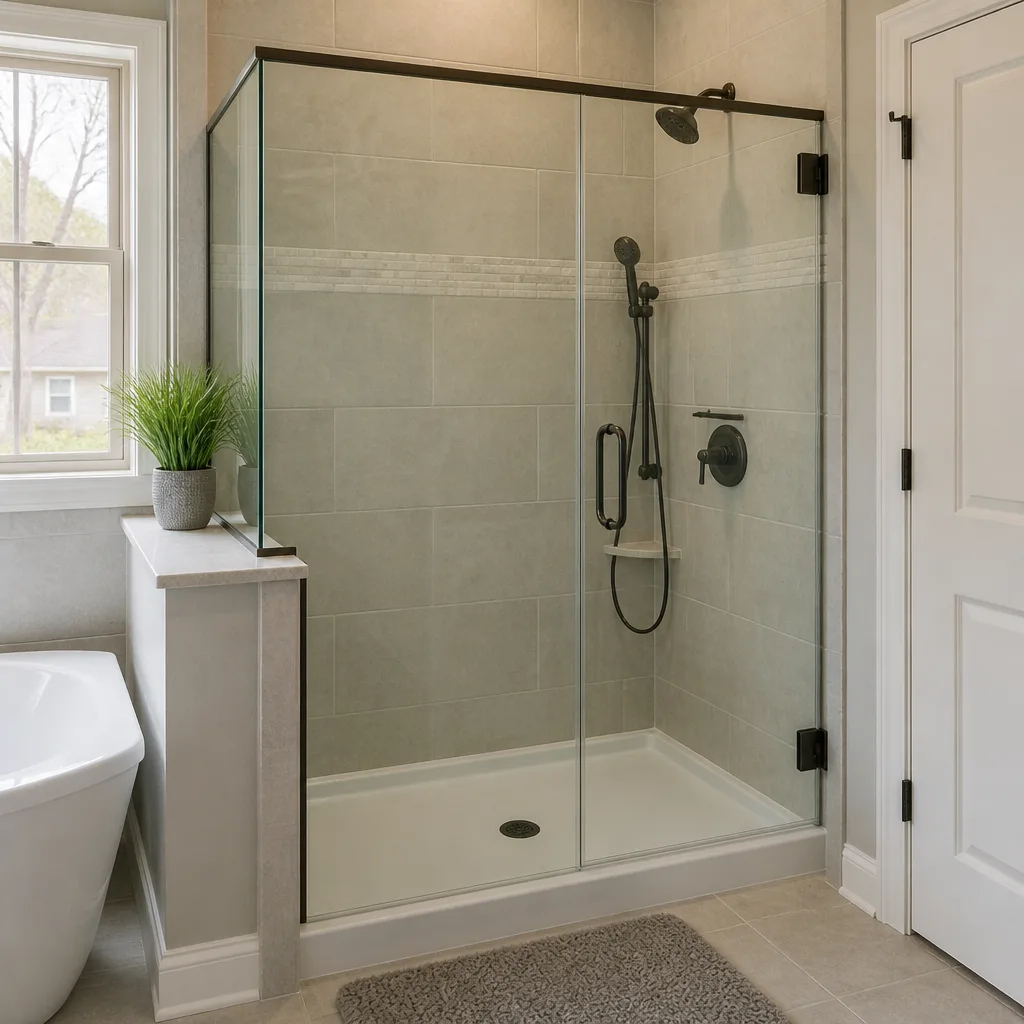 Tub-to-shower
 Freestanding tub
 Kohler
 Moen
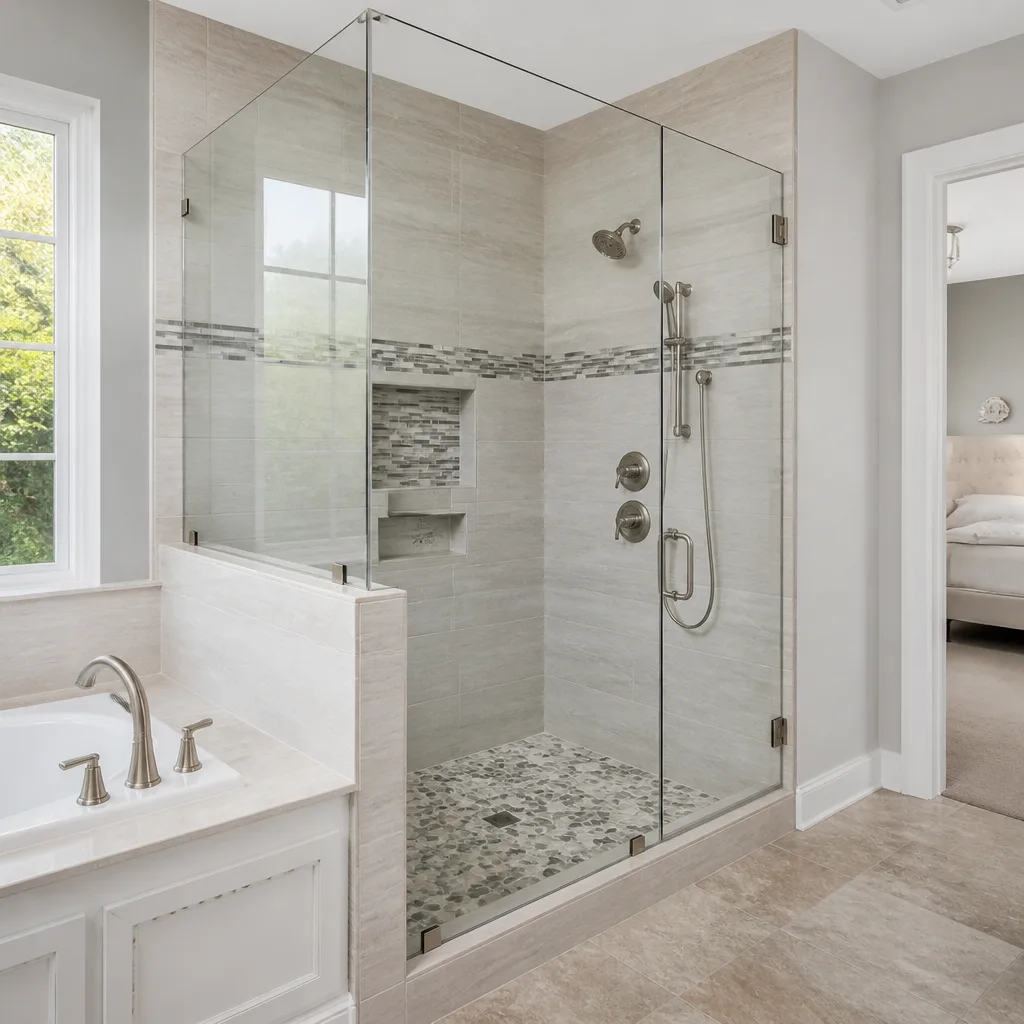 Delta
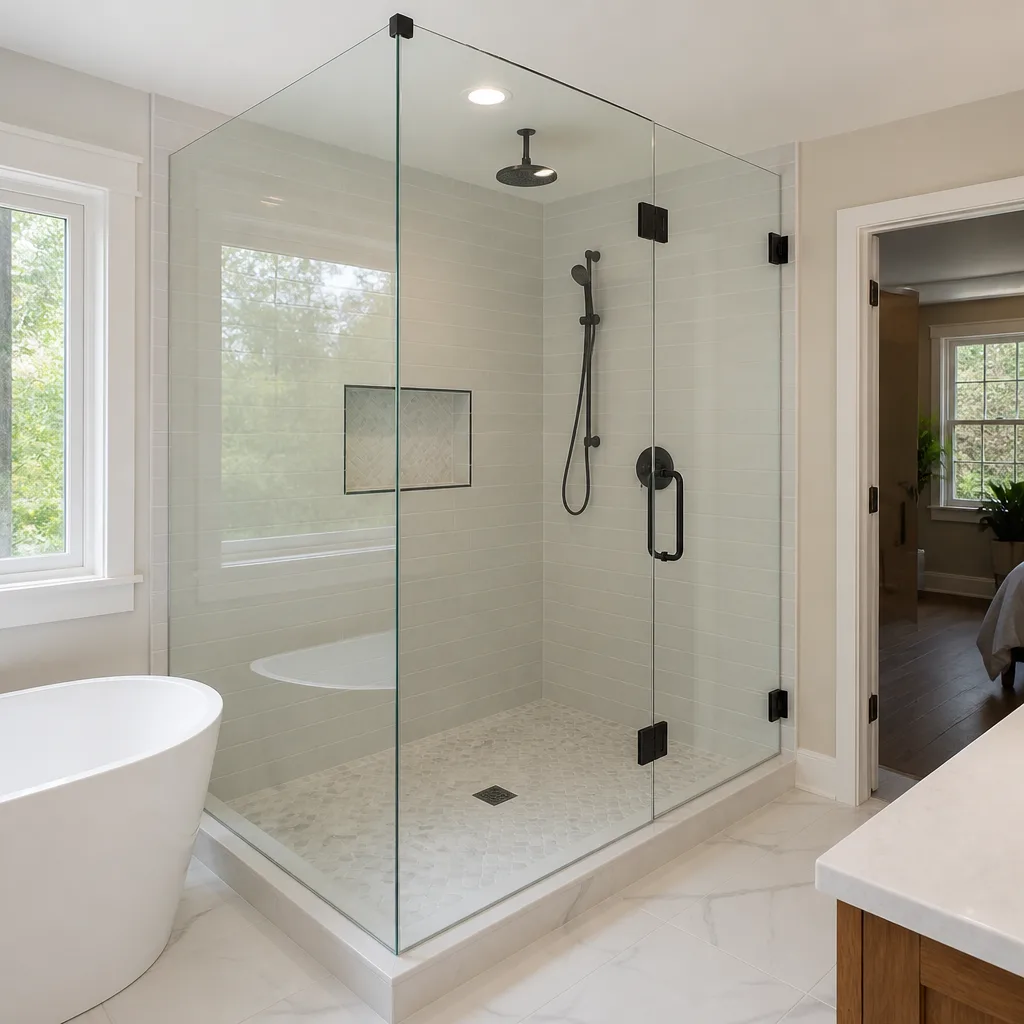 Frameless glass
Free in-home design visit - walk-in showers, tub-to-shower conversions, and Kohler, Moen, and Delta fixtures planned to your exact space
Bathroom Remodeling Permits, Codes & Inspections in Paradise, NV: What You Need to Know
Here’s the part that surprises almost everyone: a permit for your bathroom doesn’t come from Las Vegas. If your property address reads Paradise, NV, you live in an unincorporated community within Clark County, and your bathroom remodel is regulated by the Clark County Building Department, not the City of Las Vegas. That single fact trips up homeowners and catches contractors off guard, and a permit filed with the wrong jurisdiction can sit in the wrong queue for weeks before anyone notices. In this guide, we’ll walk through what actually triggers a permit in Paradise, how the fee schedule and review timeline work, which plumbing and electrical rules apply in the wet zones of a bathroom, how unpermitted work affects your insurance claim and your ability to sell, and the inspection sequence your project will move through from rough-in to final.
Quick Answer
A bathroom remodel in Paradise, NV that moves plumbing, adds or relocates electrical circuits, or changes the footprint or structure requires a permit through the Clark County Building Department. Cosmetic work and like-for-like fixture swaps that keep everything in the same location typically do not. The work then goes through rough-in, framing, and final inspections before the job counts as finished.
Styles & brands we work with
- Walk-in shower
- Tub-to-shower
- Freestanding tub
- Kohler
- Moen
- Delta
- Frameless glass
Table of Contents
- Why Paradise Permits Go Through Clark County, Not Las Vegas
- What Triggers a Permit in Paradise (and What Doesn’t)
- Clark County Permit Fees and Review Timelines
- Nevada Plumbing and Electrical Rules in the Bathroom Wet Zone
- How Unpermitted Work Affects Insurance and Your Sale
- The Inspection Sequence: Rough-In, Framing, Final
- What Inspectors Commonly Flag in Paradise Bathrooms
- When to Bring in a Bathroom Specialist
Why Paradise Permits Go Through Clark County, Not Las Vegas
People search “bathroom remodeling permits Paradise NV Clark County” for a reason. The name on your mail says Paradise, but the permitting authority is a county department, and that distinction matters from the first form you file. Paradise is one of the unincorporated towns in Clark County, which means it operates outside the City of Las Vegas municipal structure. Building permits, plan review, and inspections for residential work in Paradise are handled by the Clark County Building Department.
The trouble starts when a contractor who works mostly inside Las Vegas city limits assumes the rules are the same. The forms are different, the submittal process is different, and the inspection queue is different. A permit pulled from the wrong jurisdiction isn’t just a paperwork error. It can mean your project is inspected by the wrong office, or not inspected at all, and then you’re the one holding an opened wall and a stalled schedule.
Here’s what that means for you practically:
- Check the jurisdiction on the permit application. Your address determines it, and Paradise addresses route to Clark County.
- Ask any contractor directly which department they’ll file with. If they can’t answer in one sentence, that’s your cue to slow down.
- Confirm the address on the record matches your property record. Mismatched parcel or address details are one of the most common reasons a submittal bounces back.
We’re a bathroom-only remodeler working in this community, and understanding which door to knock on is part of the job. A Paradise bathroom that would sail through one jurisdiction can sit in “additional information required” for weeks in another just because someone used the wrong form. The neighborhood names in this part of the valley, from around the Strip corridor to the residential pockets north of the airport, are all inside the same county framework. The jurisdiction doesn’t change by street. It changes at the city line.
What Triggers a Permit in Paradise (and What Doesn’t)
The cleanest way to understand bathroom permits is a line: anything that changes where water, waste, or electricity goes, or that opens up structure, needs a permit. Anything that swaps a fixture in the exact same spot, like for like, usually doesn’t. The line isn’t always intuitive, so here’s the practical breakdown.
Work that typically requires a Clark County permit
- Moving or adding a drain, supply line, or vent stack
- Relocating a toilet, sink, or shower
- Converting a tub to a walk-in shower when the drain, valve, or wall layout changes
- Adding, relocating, or upgrading an electrical circuit, including a new outlet, GFCI, or dedicated line
- Adding or moving a light fixture, exhaust fan, or switch where new wiring is involved
- Removing or altering a wall, or changing the bathroom footprint
- Replacing a water heater or altering gas lines if the bathroom shares that system
Work that usually does not require a permit
- Replacing a faucet, showerhead, or toilet with the same model in the same location
- Swapping a vanity light for one that connects to the existing wiring in the same spot
- Painting, tile, flooring, and cabinetry that doesn’t involve plumbing or electrical relocation
- Replacing a mirror, vanity top, or hardware
The tub-to-shower conversion deserves a special mention. It’s one of the most common bathroom upgrades we’re called for, and it’s also one of the most common places people skip a permit because the footprint looks small. But when the conversion moves the drain, replaces the valve, changes the wall build-out, or adds a new mixing valve for a shower, a permit is in the picture. If you’re planning one, our walk in shower service is built entirely around that conversion, and we handle the permit conversation as part of the scope rather than an afterthought.
When in doubt, call the Clark County Building Department and describe the work in plain language. A five-minute call beats a reopened wall.
Clark County Permit Fees and Review Timelines
We won’t quote you a dollar figure here, because Clark County’s fee schedule is set by the department and reviewed against the valuation and scope of your specific project. What we can tell you is how the fees are structured and how the review timeline generally moves, so you know what to expect when you call.
How the fee structure works
- Valuation-based building permit fee. The department looks at the declared value of the work, not the price you paid for materials.
- Trade permits. Plumbing and electrical work each carry their own permit when they’re part of the project.
- Plan review fee. Larger or more complex scopes can require review before the permit is issued, and that review has its own fee.
- Inspection fees. These are typically rolled into the permit rather than billed separately per visit, but confirm that with the department.
Typical review timelines
For a straightforward residential bathroom tear-out and rebuild, the path is usually a same-day or next-day issuance for simple scopes, and one to a few weeks for anything that needs plan review. The time depends on whether the submittal is complete, whether the department needs additional information, and how busy the review desk is. A missing drawing or an address mismatch costs you real days. We’ve seen projects that should have been issued in a few days stretch into weeks purely because a form was incomplete.
Here’s the working rule we use: submit complete, submit early, and don’t count a permit as issued until you’re holding it. The written estimate should spell out what portion of the permit cost is included, so there’s no surprise line item. Our team plans the permit step into the project timeline from the start rather than treating it as a bottleneck discovered on day one. That’s a small discipline that saves a lot of frustration.
If you’d like a realistic read on how the permit step fits your project, call us at (888) 349-5908. We answer 24/7. Fast dispatch from 7am to 7pm, Sunday through Friday.
Nevada Plumbing and Electrical Rules in the Bathroom Wet Zone
Nevada adopts a plumbing code and an electrical code that apply to every bathroom in the state, and the bathroom is the most demanding room in the house for both trades. Between the water, the waste, and the power in a small, humid space, there’s very little room for improvisation. Here’s the practical picture.
Plumbing in the wet zone
- Vent stacks matter. Drains need to be vented properly, and moving a drain without reworking the vent is a common rough-in failure.
- Shower pans and waterproofing. A walk-in shower needs a properly sloped pan and a waterproof membrane beneath the tile. This is where a good build shows its discipline. Schluter Systems is the standard we build to for waterproofing membranes and substrate work, because once tile is set, the membrane is the only thing standing between the shower and the ceiling below.
- Valve and mixing. New fixtures need matching rough-in valves. A Moen or Delta valve body has to be installed to the manufacturer’s spec for the trim to function properly and for the install to pass.
- Access and protection. Electrical components in a bathroom must be placed away from water where the code requires it, and GFCI protection is required for bathroom circuits.
Electrical in the wet zone
- GFCI protection. Every bathroom outlet is required to be GFCI protected, and it needs to be tested and functional at final inspection.
- Dedicated bathroom circuits. Bathrooms are subject to dedicated-circuit requirements depending on what’s installed. A vanity or exhaust fan changes the calculation.
- Exhaust and ventilation. A bathroom with a shower needs mechanical ventilation, and the fan needs to be wired correctly to a switch or timer.
- Clearance from water. Lighting over a tub or shower has clearance rules, and the wrong fixture over a wet area is a common inspection flag.
None of this is glamorous, and it rarely shows up in a before-and-after photo. But it’s exactly where a bathroom that lasts diverges from one that leaks. Our technicians have up to 15 years of experience working in these wet-zone details, and our bathroom remodeling projects live or die by them. If the mechanical, plumbing, and electrical work behind the tile is right, the finished room looks like a photograph. If it isn’t, that’s what shows up in a wall.
How Unpermitted Work Affects Insurance and Your Sale
Unpermitted bathroom work is one of the quietest liabilities a homeowner can carry. Nobody notices until the day they need to. And then the discovery tends to happen at the worst possible moment: during a claim, or during a sale, or during a refinance appraisal.
The insurance side
Homeowners insurance covers sudden, accidental damage. When water escapes from a shower pan or a supply line fails, an adjuster investigates. If the covered damage stems from work that was never permitted or never inspected, the insurer can deny the claim, limit it, or dispute how the loss occurred. The distinction between a plumbing failure that happened and a plumbing failure that was caused by an unpermitted, uninspected modification is a big one. The first is a claim. The second is an argument.
The sale side
Title transfer in Clark County involves disclosures, and your buyer’s inspector will look at the bathroom. A home inspector who sees a relocated drain with no permit history, a new electrical circuit with no inspection record, or a shower that was clearly rebuilt can note it as an unpermitted alteration. That note triggers negotiation, and sometimes a demand that the seller pull permits retroactively before closing. A retroactive permit means opening walls, exposing the work, and passing inspection on somebody else’s build. It’s the most expensive way to do a bathroom twice.
The remedy, when there’s time
- Pull the property’s permit history through the Clark County Building Department.
- Compare the history to what’s actually built in the bathroom: the drain location, the circuits, the fixtures.
- If there’s a mismatch, talk to the department about a retroactive permit before listing or before you claim.
- If you’re remodeling now, don’t skip the permit to save time. The time is the cheap part.
We’d rather spend two extra days on a permit now than watch a homeowner spend two extra months unraveling it later. That’s a big reason our projects in Paradise file the correct paperwork the first time.
The Inspection Sequence: Rough-In, Framing, Final
Once the permit is issued, a bathroom remodel moves through an inspection sequence. Each stage is a checkpoint, and the project doesn’t advance until the previous stage passes. Understanding the order helps you plan your schedule and know when real progress is happening.
- Pre-construction and permit posting. The issued permit goes up on the property before any work begins. Inspectors need to see and reference it.
- Demolition and rough framing. The old bathroom comes out, the walls open, and the framing goes in. Any structural changes are visible at this stage.
- Rough-in inspection. This is the big one. Plumbing supply, drain, and vent lines must be in place and exposed for inspection. Electrical rough-in, including boxes, wiring, and GFCI placement, is also inspected at this point. Nothing gets walled over before this passes.
- Framing inspection. If the project changed walls, added a niche, or altered structure, the framing is checked before the next layers go on.
- Waterproofing and substrate. The waterproofing membrane, shower pan slope, and backer board go in once the rough-in is approved. This step protects the inspection result for years, so it’s worth the extra care.
- Final inspection. With tile in, fixtures set, and finishes complete, the final inspection confirms that the plumbing, electrical, exhaust, and fixtures meet code and match what the permit authorized.
In practice, a Paradise bathroom project can have more than one inspection visit, depending on scope. If the plumbing and electrical work happens on different days, or if a change order adds a fixture, the department may schedule additional checks. A contractor who plans for that in the schedule is a contractor who won’t stall your project when it matters. Our team builds the inspection calendar into the job from the first day.
We treat inspections as a reason for confidence rather than a nuisance. Every inspection that passes is a layer of proof that the room was built correctly, and that’s the evidence a buyer and an insurer will want years from now.
What Inspectors Commonly Flag in Paradise Bathrooms
After years of working in this county, some inspection flags show up again and again. None of them are exotic. Most trace back to a shortcut taken early, and they’re all fixable when caught before final. Here are the ones we see most often.
- Unvented or improperly vented drains. A relocated drain without a proper vent fails rough-in and has to be reworked.
- Missing or miswired GFCI. Bathroom circuitry without GFCI protection, or a GFCI that won’t trip and reset at final, is a common rejection.
- Insufficient shower pan slope. A shower pan that doesn’t drain toward the weep point will hold water, and inspectors know it.
- Waterproofing that isn’t continuous. Gaps at the corners, at the curb, or where the backer meets the pan leave the shower exposed. Schluter-backed waterproofing solves this properly.
- Exhaust fan vented to nowhere. A bathroom fan that blows into the attic or a dead space isn’t ventilation. It needs to go outside.
- Fixture clearance. A toilet or vanity placed too close to a wall or against a door swing fails clearance rules.
- Permit not matching the work. A project that added a circuit or moved a fixture without updating the permit scope gets flagged at final.
In the desert climate around Paradise, the ventilation detail deserves special attention. Bathrooms here don’t get much humidity from the outside air, but they generate plenty inside. A properly vented exhaust fan and a well-sealed waterproofing system keep the moisture where it belongs. When the build is right, the surrounding climate works with the room. When it isn’t, a shower becomes a slow problem hidden in the wall.
Brand choices help, too. We work with Moen, Delta, American Standard, and Toto so we can match fixtures to the wet-zone demands of a given bathroom. A Toto valve or a Delta rough-in installed to spec reduces the chance of a callback and makes the inspection outcome predictable. That’s not marketing. It’s how you avoid repeating work.
Common Mistakes to Avoid
- Filing with the wrong jurisdiction. This is the Paradise mistake that costs the most time. Confirm with your contractor that the permit is going to the Clark County Building Department before any work begins.
- Assuming a tub-to-shower conversion is permit-free. If the conversion moves the drain, replaces the valve, or changes the wall, it needs a permit. Approaching it as an “easy swap” is how projects get stalled.
- Skipping the permit to save a few dollars. The cost of a permit is a fraction of the cost of retrofitting one. When you go to sell or file a claim, the missing paper is the expensive part.
- Walloping over the plumbing before rough-in inspection. Once tile goes on, exposed rough-in is gone forever. A failed rough-in behind tile means demolition.
- Treating waterproofing as optional. A shower that dumps moisture into the structure is the most expensive kind of shortcut, because it hides until the damage is significant.
- Not checking the permit history before you buy. A Paradise home with a recently remodeled bathroom should have a permit record. If it doesn’t, ask why before closing.
- Going with a generalist who doesn’t know the bathroom codes. A contractor who treats the bathroom as one of many trades makes avoidable mistakes in the wet zone. A bathroom-only specialist knows these rules cold.
See the difference
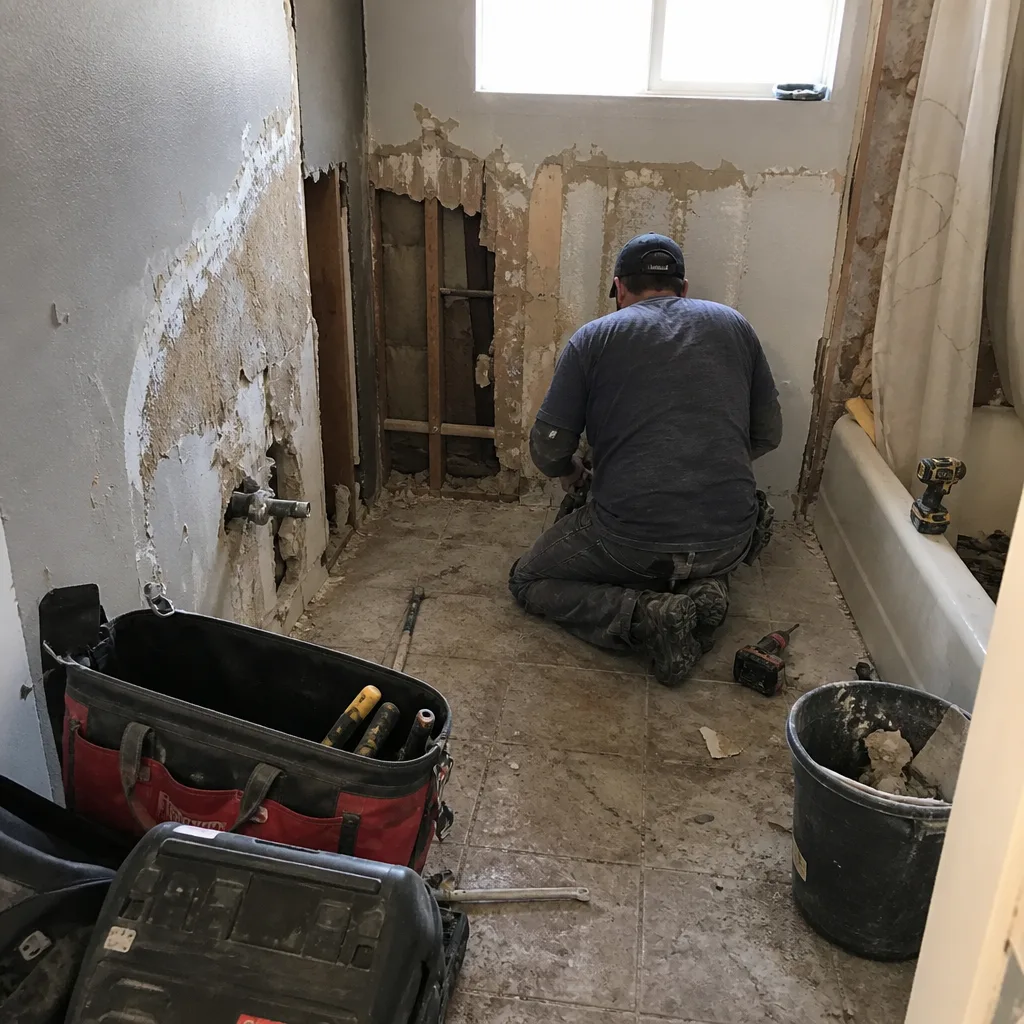 Before
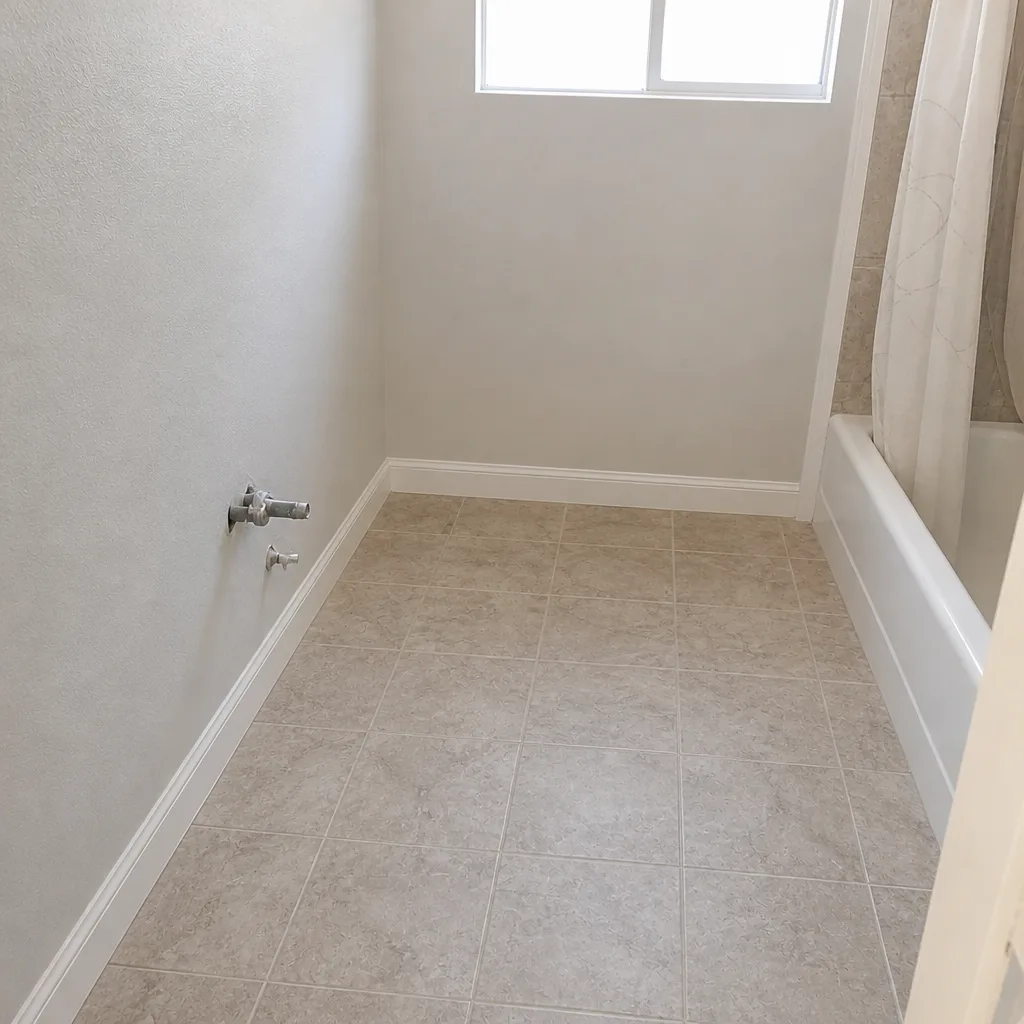 After
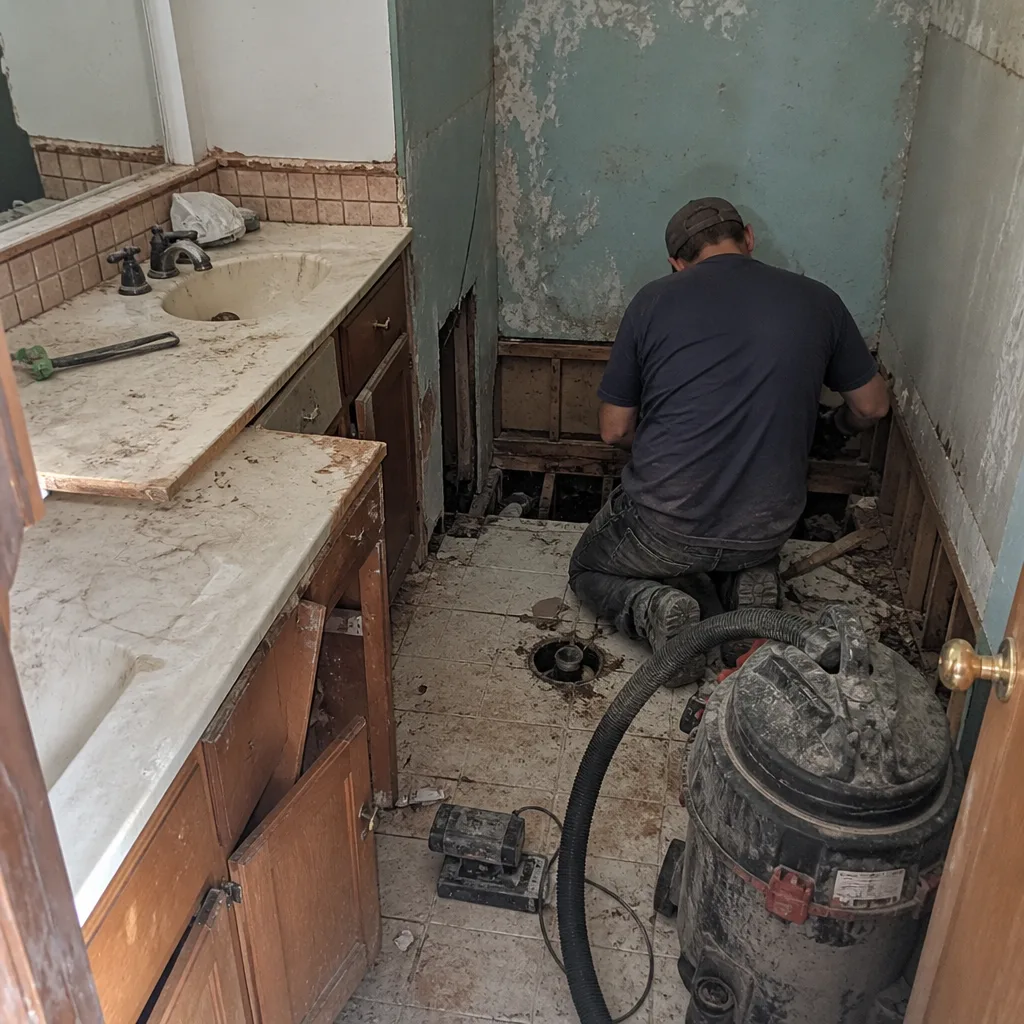 Before
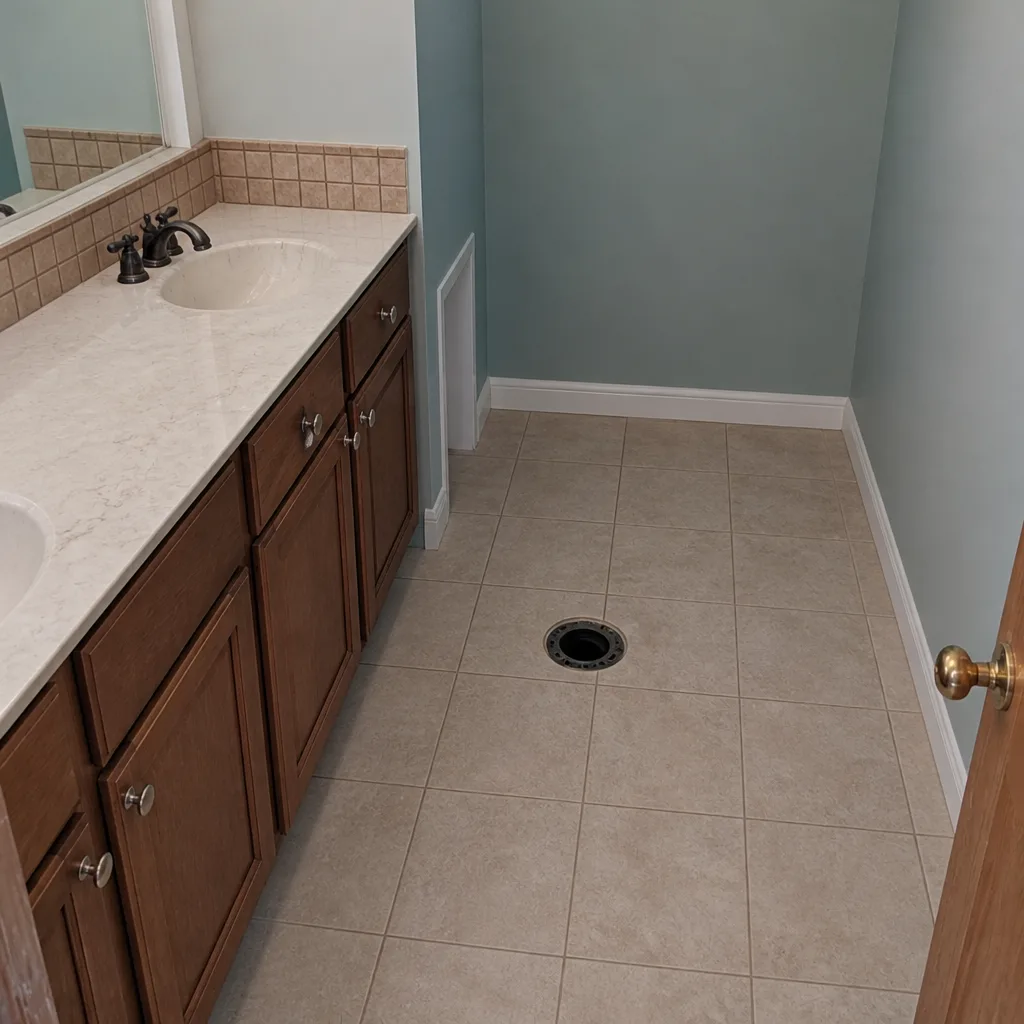 After
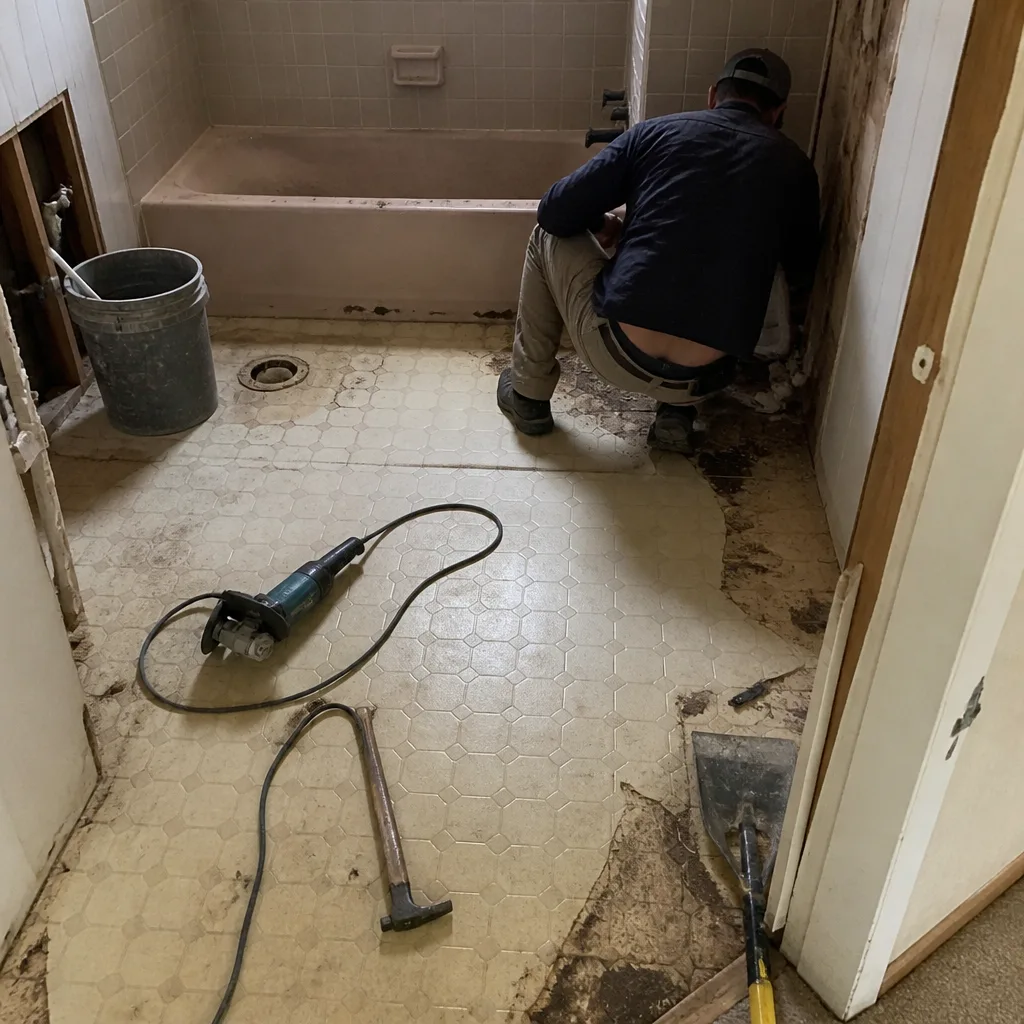 Before
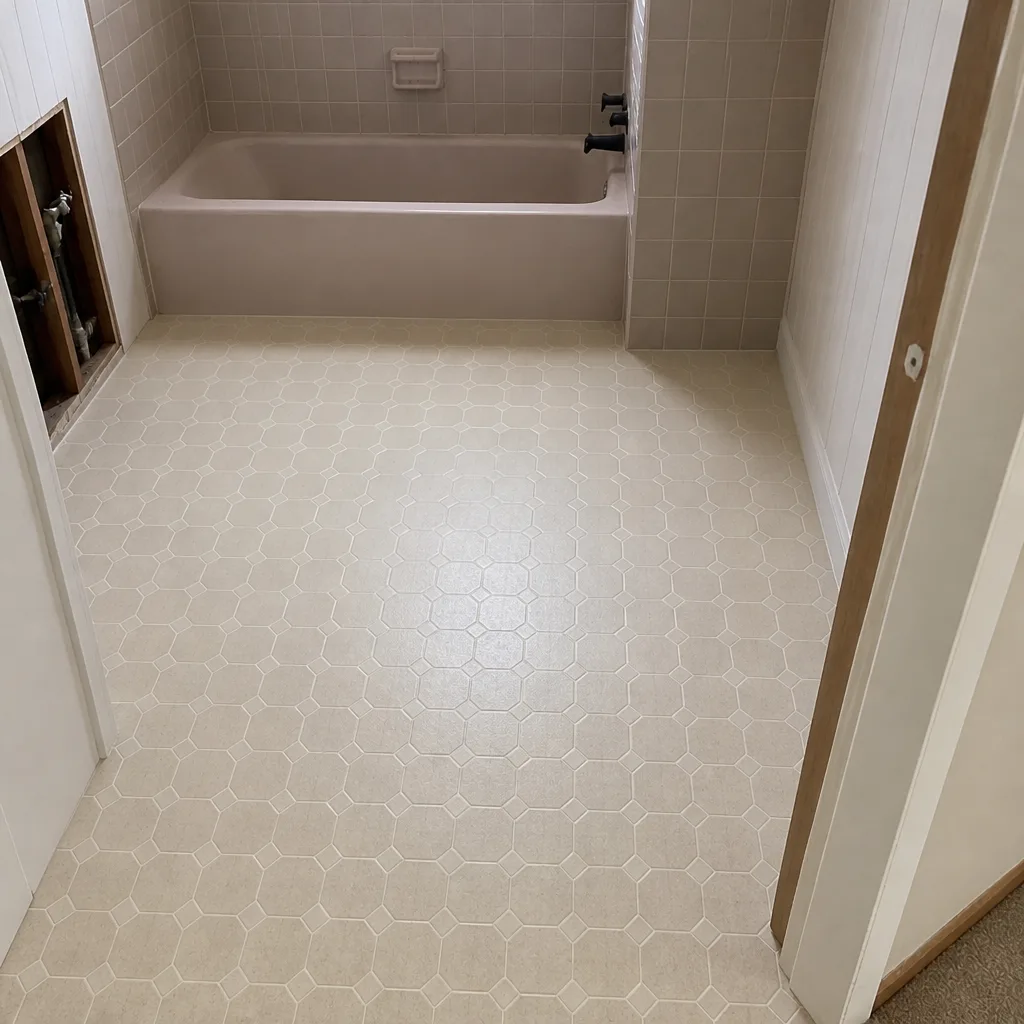 After
When to Call a Professional
If your project involves moving a drain, relocating a toilet or sink, adding an electrical circuit, converting a tub to a shower, or opening a wall, the work has crossed into permit territory, and it’s worth having a specialist involved from the first estimate. The same is true if you’ve inherited an older Paradise bathroom with no permit history, or if you’re planning an accessible remodel and need the build to hold up over a long horizon. Bathroom Remodeling Paradise offers free estimates in Paradise. Call (888) 349-5908 to schedule yours. We answer 24/7. Fast dispatch from 7am to 7pm, Sunday through Friday.
Frequently Asked Questions
Yes, if the work involves moving plumbing, adding or relocating electrical circuits, or changing the structure or footprint. A like-for-like fixture swap in the same location typically does not need one. When in doubt, call the Clark County Building Department or ask us at (888) 349-5908 and we’ll help you figure out where your scope lands.
The Clark County Building Department handles residential bathroom permits for Paradise addresses, not the City of Las Vegas. Paradise is unincorporated, which is why the jurisdiction is different. That distinction is the single most common source of permit delay we see, so confirm it in writing before work starts.
It depends on the scope, and often yes. If the conversion moves the drain, replaces the valve, changes the wall layout, or adds a new mixing valve for the shower, a permit is required. If you’re replacing a tub with a shower in the exact same footprint with no moved plumbing, it may not be. Call (888) 349-5908 and we’ll walk through your specific plan.
Simple scopes can move quickly, while projects that require plan review can take a few weeks. Completeness is the biggest variable, since a missing drawing or a mismatched address pushes the submittal back. The department sets the actual timeline, so build some buffer into your schedule and expect to wait a few days to a few weeks depending on scope.
Unpermitted work can affect your insurance claim and complicate the sale of your home. An insurer can dispute coverage for damage caused by uninspected work, and a buyer’s inspector can flag it as an unpermitted alteration. The remedy is to pull the permit history and pursue a retroactive permit before you list or file a claim. Call us for a free estimate to assess what’s needed.
Our written estimate spells out what’s included, and the permit cost is documented separately so there are no surprises. The estimate is free and the price is set per job by the written estimate. Call (888) 349-5908 to schedule yours and we’ll walk through the scope, timing, and inspection plan for your Paradise bathroom.
The Bottom Line
In Paradise, NV, the permitting authority is the Clark County Building Department, and the master rule is simple: moving plumbing, electrical, or structure needs a permit; a same-spot fixture swap usually doesn’t. A tub-to-shower conversion that moves the drain or valve is permit work. The sequence runs from rough-in to framing to final, and the details in the wet zone, from venting to GFCI to proper waterproofing, are what the inspection protects. Skipping the permit to save time is the most expensive shortcut in the room, because it surfaces later at your insurance claim or your sale. Get the paperwork right, and the finished bathroom stands up.
Written by the team at Bathroom Remodeling Paradise.